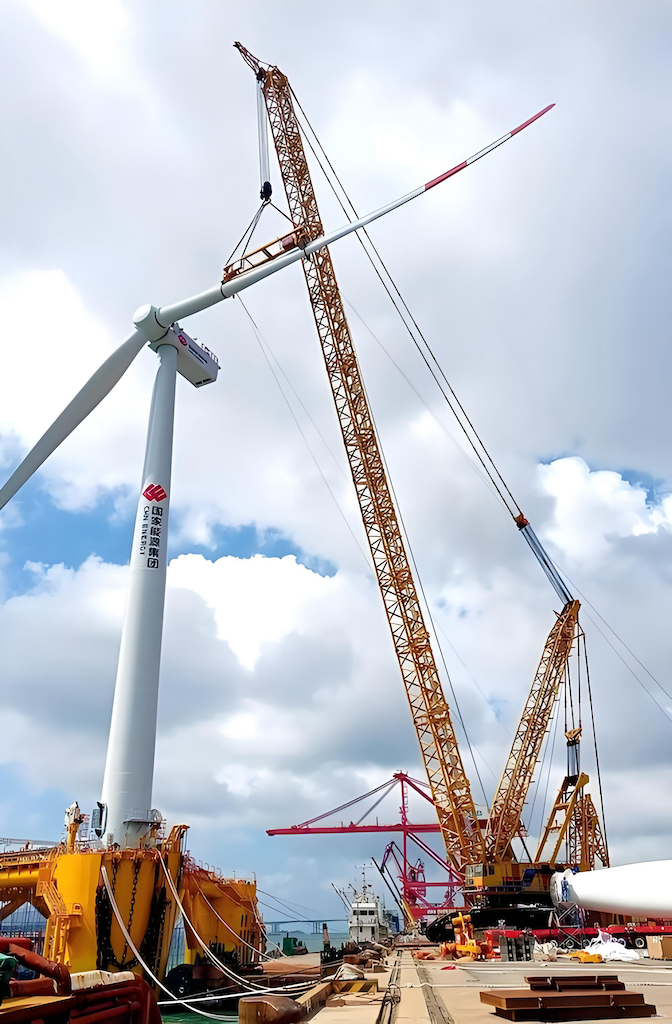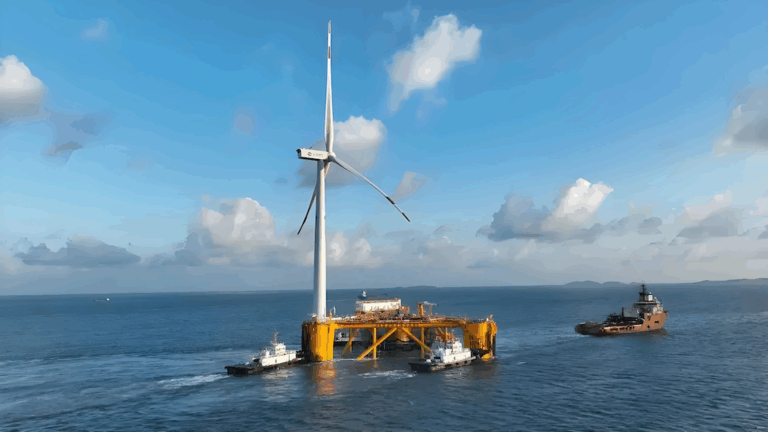
In late 2023, in a groundbreaking moment for offshore construction, XCMG’s mighty XGC28000 crawler crane completed a lift that could change the future of renewable energy at sea. This isn’t just any lift—this was the world’s first floating wind-fish integration platform, the “Guoneng Shared Platform,” and it happened right off the coast of Fuzhou, China.
Let me explain why this is such a big deal.
The project, which combines floating wind power with offshore fish farming, is the first of its kind anywhere in the world. That means the engineers and crane operators had zero reference points. Everything had to be calculated from scratch, tested with precision, and executed flawlessly. The Guoneng Shared Platform has been recognised as a major science and technology innovation project by the Fujian provincial government, and for good reason.
A Closer Look at Wind-Fish Integration: How It Works and Why It Matters
This new industry model represents the fusion of modern agriculture and renewable energy, achieving an eco-friendly cycle of “generating electricity above water, raising fish below.” Through smart integration of technologies, the concept delivers both clean energy and marine economic value.
The base of the offshore wind turbine is modified to function like an artificial reef. This design attracts marine life like fish, shellfish, and seaweed, offering them shelter and spawning grounds. Over time, this setup also draws in predator species, gradually forming a balanced marine ecosystem. Above the surface, the platform hosts a smart aquaculture system that can operate with minimal human oversight. It’s a system where renewable energy and ocean farming not only coexist but thrive together.
The World’s First Floating Wind-Fish Platform: Key Specs
Built off the coast of Putian in Fujian, this platform is a landmark example of wind-fish integration. Structurally, it uses a three-column semi-submersible design made from over 27 steel modules. The platform spans 70 metres on each side, stands over 24 metres tall, and has a draft of 14 metres. Weighing about 4,900 tonnes—roughly equal to 3,000 small cars—it is anchored with nine mooring chains, giving it the ability to withstand typhoon-force winds of up to 15 on the Beaufort scale.
On the energy side, a 4MW offshore wind turbine is mounted on the platform, with a wind-swept area equivalent to more than 185 football fields. Below the water, the fish farming zone holds around 10,000 cubic metres of water, roughly the volume of five standard swimming pools. This allows the platform to generate dual income streams from both energy and aquaculture.
XGC28000’s Role in Making It Happen
To bring this concept to life, a massive floating platform had to be fitted with high-tech wind turbine components, including two large tower sections, a 193-tonne nacelle, and three enormous blades.
The XCMG XGC28000 is a 2,000-ton capacity crawler crane—the largest in the company’s fleet and one of the most powerful crawler cranes in the world. For this job, it was deployed with a 126-metre main boom and superlift configuration. First, it lifted and connected the two tower sections, weighing 226 tonnes and 102 tonnes respectively. Then came the most critical lift: the 193-tonne nacelle. This had to be raised with precision and fitted at a height of over 100 metres using a 42-metre working radius.
Precision was key here. Imagine balancing a car on top of a tall pole, in a windy dockside environment, and you’ll start to understand the complexity of this operation. After the nacelle was secured, the XGC28000 lifted and installed three giant blades, aligning them perfectly with the hub high in the sky.
What made this job especially challenging was that the crane could not be placed on the platform or vessel. The floating structure was too wide and unstable for land-based machinery. Instead, the crane had to be positioned firmly onshore, reaching out over a large working radius while maintaining lifting capacity and height. This is where XCMG’s superlift counterweight and variable-radius system proved their worth, providing both the balance and the muscle needed for the high-reach lifts.
According to the project manager from Dalian Xinxing, the XGC28000’s mobility and fast counterweight setup saved significant time and cost. That’s a big compliment in an industry where every hour of delay can cost thousands of dollars.
This isn’t the first time the XGC28000 has impressed. Over the past few years, it has been the go-to crawler crane for a number of cutting-edge projects across China, including nuclear power plant installations, petrochemical modules, and other major offshore wind projects. But the floating wind-fish integration lift might be its most iconic moment yet.
Why This Matters for the Future
Because it shows how crawler cranes like the XGC28000 are no longer just heavy lifters—they are enablers of future technology. As more countries push into offshore renewables and seek to combine industries like aquaculture and energy, we’ll need cranes that can handle more complex, more delicate, and more remote jobs.
For XCMG, this is also a major branding win. They have now proven that their flagship crawler crane can compete on the world stage, not just in lifting capacity but in real-world application. And let’s be honest—when you’re the first in the world to help build something, that sets a benchmark others will follow.
Looking forward, XCMG has announced that they will continue to innovate around heavy lifting technology, focusing on smarter systems, faster assembly, and higher lifting capacities. In other words, they want to make cranes that can think, adapt, and perform better in all kinds of extreme environments.
And if this project is anything to go by, they’re already well on their way.