In today’s complex construction landscape, particularly in urban high-rise projects and dense industrial sites, space is often the most expensive and limited resource. In these environments, traditional cranes can struggle—not because of lifting capacity, but due to restricted working radius and the challenge of avoiding swing collisions. Enter the luffing jib crane, a specialist solution for precisely these kinds of challenges.
But what exactly is a luffing jib, how does it differ between crane types, and when is it worth the investment? Let’s break it all down.
What Exactly Is a Luffing Jib?
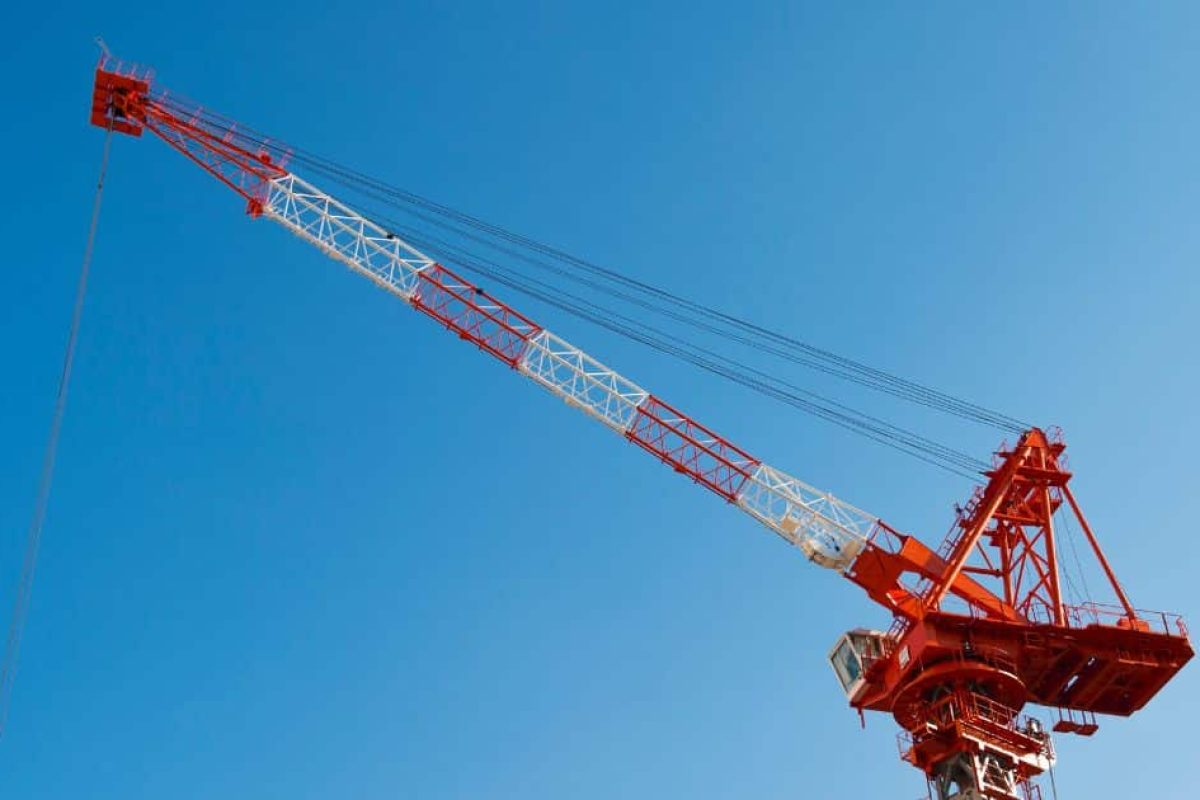
At its core, a luffing jib is a crane boom system that pivots at its base, allowing the jib to move up and down in a vertical arc—a process called “luffing.” This differs from a traditional fixed jib (like on a flat-top tower crane), which has a constant angle and requires a wide slewing radius to reposition a load.
This ability to adjust the boom angle means you can operate in tight quarters, lift vertically, and position loads more precisely without oversailing restricted areas or neighboring properties.
When—and Why—You Use a Luffing Jib Crane
1. Confined Urban Projects
Luffing jib tower cranes are the gold standard for inner-city construction. In environments where multiple cranes are working in close proximity, the reduced slewing radius of a luffing jib becomes essential.
Example: The Terex CTL 272-18 is built for urban high-rise work, with a compact footprint and the ability to “park” the jib at steep angles (up to 88°), minimizing conflict zones between adjacent cranes.
2. Sites with Vertical Space but Limited Horizontal Room
In scenarios where you have room to build up but not out—like narrow alleyways, between existing buildings, or over existing infrastructure—luffing jib cranes shine.
3. Heavy Industrial Projects
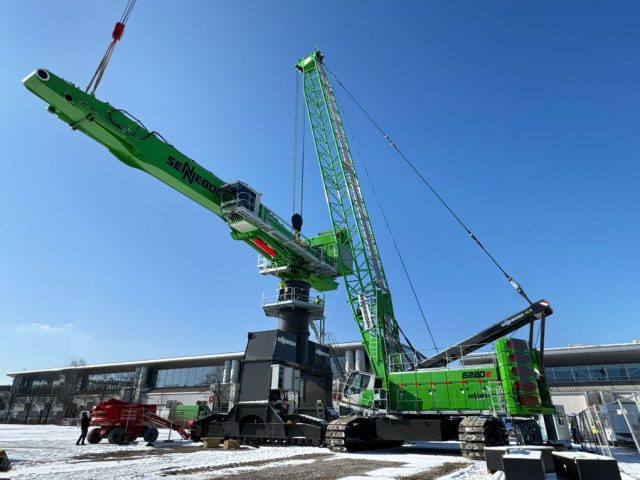
Crawler cranes equipped with luffing jibs, like the Manitowoc MLC300, offer massive lifting capacities with flexible boom configurations. They are often used in refineries, power plant construction, or wind turbine installations where component sizes vary and precise lift paths are required.
4. Retrofitting or Vertical Expansions
Luffing jib cranes are ideal for retrofitting jobs in existing structures, where you’re lifting materials over fragile roofs or onto tight rooftops without disturbing the surrounding architecture.
5. Safety and Air Rights Management
In many urban environments—especially near airports or residential zones—you must limit the oversailing of private property. A luffing jib can keep the crane’s working area strictly within the project boundary, a key factor for legal compliance and public safety.
Types of Cranes That Use Luffing Jibs
1. Luffing Jib Tower Cranes
These are purpose-built for vertical construction in tight spaces. Their key advantages include:
- Narrow slewing radius
- Reduced wind load when parked
- Efficient for high-rise projects with many floors
- Better height-under-hook clearance at short radii
Example: Comansa LCL700 – A modular luffing jib tower crane offering flexible configurations and smooth variable frequency control, ideal for congested skyline work.
2. Crawler Cranes with Luffing Jibs
Adding a luffing jib to a crawler crane enables heavy lifts with a reduced swing radius—important in industrial sites where obstructions limit boom clearance.
Example: Liebherr LR 1800-1.0 – With luffing fly jib attachments, this unit combines high lifting capacity (up to 800 tonnes) with flexible reach, especially useful for wind energy installations and petrochemical jobs.
3. Mobile Cranes with Luffing Attachments
Some mobile cranes allow for modular luffing jib extensions to expand their range while maintaining a smaller swing path—useful for temporary installs or rescue lifts in awkward access sites.
Example: Liebherr LTM 1750-9.1 with luffing jib – Excellent for bridge replacements or wind turbine component lifts where space is constrained.
Key Engineering Considerations
1. Wind Load Sensitivity
Luffing jib cranes, especially on tower bases, are generally more sensitive to wind when not in operation. Parking the jib at steep angles minimizes this, but requires careful planning for adverse weather.
2. Higher Mechanical Complexity
The luffing motion introduces more moving parts—hydraulics or winches depending on the system—which means more maintenance and higher upfront cost. But in exchange, you get tighter maneuverability and vertical lifting capacity.
3. Assembly and Dismantling Time
Compared to flat-top or hammerhead cranes, luffing jib systems often require longer installation and dismantling times. This is worth factoring into overall project logistics.
4. Cost-Benefit Ratio
While luffing jib cranes tend to cost more upfront, the time saved on material handling and legal clearance issues often justifies the investment—especially in sites where real estate is at a premium.
Real-World Example: Urban Hotel Construction
A hotel construction project in a downtown core using a Terex CTL 340-24 luffing jib tower crane. The site was boxed in on three sides—residential buildings, a busy street, and an existing restaurant. A flat-top crane would’ve oversailed neighbors, violating city permits. The luffing jib not only kept the load path within our site boundary, it sped up floor cycles by 12% thanks to shorter swing paths and faster repositioning.
Conclusion
Luffing jib cranes aren’t for every job—but when you need precision, vertical reach, and maneuverability in tight spaces, they’re absolutely the right tool. Whether it’s a tower crane dominating a skyline, a crawler unit threading through a refinery, or a mobile crane reaching over a viaduct, the luffing jib provides a unique advantage in complex lift scenarios.
It all comes down to proper planning, engineering insight, and understanding the operational limits of your jobsite.